Rasuwa Flood 2026: How Climate Change Is Changing Nepal’s Himalayan Risk | Roman Humagain
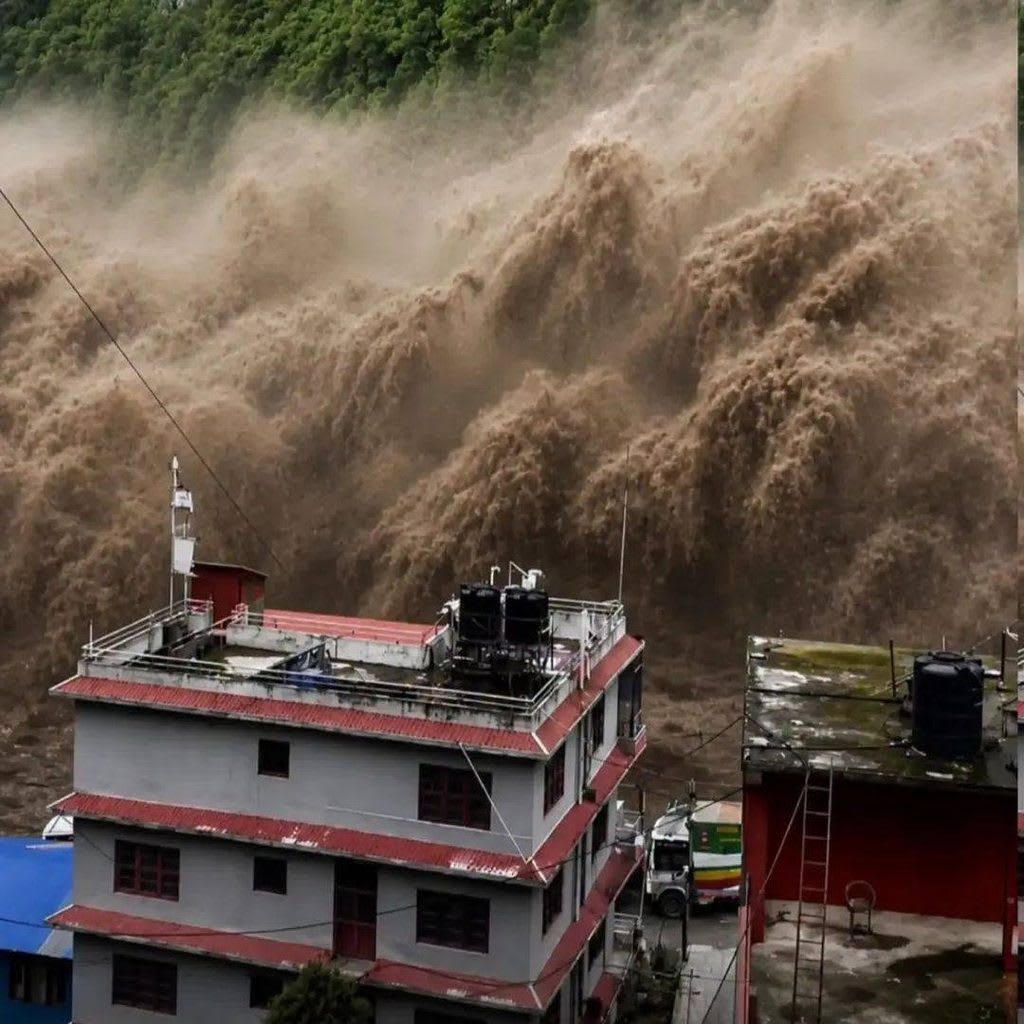
The 2026 Rasuwa disaster exposed the growing risks facing Nepal’s Himalayan communities. While the immediate event was linked to a sudden ice and rock avalanche and a powerful flood surge, a…
Rasuwa Flood 2026: How a Himalayan Disaster Reveals the Growing Climate Risk in Nepal On August 26, 2026, Nepal's Rasuwa district experienced one of the most devastating disasters in its recent history. A sudden surge of water, ice, rocks and enormous amounts of debris moved through the mountain valleys around Rasuwagadhi and the Bhote Koshi River. Roads disappeared. Bridges were swept away. Buildings, vehicles and infrastructure were destroyed. Hydropower projects along the river corridor were severely damaged, while communities were cut off from transportation and communication. The disaster did not look like an ordinary monsoon flood. It came with the force of a rapidly moving mountain system carrying water, ice, rock and sediment downstream. And that is what makes the Rasuwa disaster particularly important. It is not only a story about one devastating flood. It is a warning about how quickly risks in the Himalayan region are changing. The immediate cause of the August 2026 disaster was linked to a sudden high-altitude cryospheric event, with preliminary assessments pointing to an ice avalanche and temporary damming in the Lhende River system before a powerful surge entered the Bhote Koshi. The exact sequence and contribution of different processes are still being investigated. At the same time, scientists have repeatedly warned that a warming Himalaya is changing glaciers, snow, permafrost and high-altitude lakes, creating conditions in which cascading hazards can become more dangerous. That distinction matters. Climate change may not be the single trigger of this particular event, but it is changing the environment in which these disasters occur. What Happened in Rasuwa? Rasuwa lies in northern Nepal, along the country's border with the Tibet Autonomous Region of China. The district is dominated by steep Himalayan terrain, glaciers, high mountain valleys and rivers that descend rapidly toward lower elevations. Among the most important river systems in the area is the Bhote Koshi , which eventually connects with the Trishuli River system. On August 26, an extraordinary mountain event occurred upstream. According to the World Health Organization's preliminary assessment, a sudden surge of water entered the Bhote Koshi from the Tibet Autonomous Region, possibly following an upstream ice avalanche and temporary damming of the Lhende River. ICIMOD's assessment has also emphasized that the event was associated with an ice avalanche rather than a conventional rainfall-driven flood or a straightforward glacial lake outburst flood. The result was a powerful downstream flood and debris flow. The water did not travel alone. It carried huge quantities of: rocks boulders mud sediment ice trees debris from damaged infrastructure This combination made the flood particularly destructive. A normal river flood can rise and spread across a floodplain. A high-energy mountain debris flow can behave very differently. It can move extremely quickly, carry enormous boulders and strike infrastructure with tremendous force. That is what made the Rasuwa event so destructive. The Disaster Did Not Stop at the River The damage extended far beyond the river itself. The Rasuwagadhi area is strategically important because it connects Nepal with the Tibet Autonomous Region through one of the country's major northern trade routes. The flood damaged roads, bridges, buildings, border infrastructure, hydropower facilities and other critical assets. ICIMOD reported that the flash flood sent water, sediment and boulders through the Bhote Koshi and Trishuli river systems, raising concerns about impacts further downstream. The consequences also extended into Nepal's energy system. Several hydropower facilities along the affected river corridors suffered major damage. This is particularly significant for Nepal because hydropower is central to the country's electricity system and an increasingly important part of its economy. Reuters reported that the disaster damaged or destroyed numerous hydropower facilities and severely disrupted Nepal's power infrastructure. This means the Rasuwa flood was not simply an environmental disaster. It became: a humanitarian disaster, an infrastructure disaster, an economic disaster, and an energy-security problem. Why Was the Flood So Destructive? Several factors came together. The first was the extreme energy stored in the high Himalayan landscape. The second was the steep terrain. The third was the amount of water and debris suddenly entering the river system. And the fourth was the concentration of people and infrastructure in narrow mountain valleys. When a major flood occurs in a wide lowland area, the water may have room to spread. In a Himalayan valley, there may be very little room. A river can be surrounded by: settlements highways bridges hydropower plants transmission infrastructure warehouses businesses border facilities When an extreme flood arrives, everything located along that corridor becomes exposed at the same time. This creates a dangerous combination: high-energy water + steep terrain + heavy debris + concentrated infrastructure. Where Does Climate Change Enter the Story? This is where the discussion requires care. It would be scientifically inaccurate to say: “Climate change caused the Rasuwa flood.” The immediate trigger was a specific physical event involving ice, rock, water and mountain instability. Scientists are still studying the exact chain of events. ICIMOD has explicitly stated that the August 2026 disaster cannot yet be directly attributed to climate warming, even though climate change is increasing broader cryospheric risks across the Hindu Kush Himalaya. But this does not mean climate change is irrelevant. Quite the opposite. Climate change is changing the Himalayan environment in ways that can influence the probability and severity of different types of hazards. That is the larger story. A Warmer Himalaya Is a Changing Himalaya The Himalayas are not static. They are constantly changing. Glaciers advance and retreat. Snow accumulates and melts. Permafrost freezes and thaws. Mountain slopes expand and contract. Lakes form and grow. Ice and rock can become unstable. As temperatures rise, these processes can change. The Hindu Kush Himalaya region has experienced significant warming and cryospheric change, increasing concerns about glacier retreat, changing snow conditions, permafrost degradation and unstable high-altitude environments. These changes do not automatically produce a disaster. But they can change the conditions under which disasters occur. A mountain slope that was stable for decades may become more vulnerable. A glacier can retreat and leave unstable material behind. A lake can grow behind natural ice or sediment barriers. Permafrost can lose its ability to help stabilize mountain slopes. These processes can interact. And when they do, a hazard can become a cascading hazard . What Is a Cascading Mountain Hazard? A cascading hazard is when one event triggers another. For example: Warming → glacier or permafrost change → slope instability → ice/rock avalanche → temporary blockage → sudden water release → flash flood → debris flow → infrastructure failure The important point is that the final disaster may look very different from the initial event. A collapse high in the mountains can eventually become a flood hundreds of kilometres downstream. This is one of the biggest challenges in Himalayan disaster management. People living downstream may never see the original avalanche or glacier collapse. They only see the flood that arrives later. Climate Change Can Increase the Background Risk This is why climate change should be discussed as a risk multiplier , rather than automatically being labelled the direct cause of every individual flood. A changing climate can alter: glacier stability snowmelt patterns precipitation extreme rainfall permafrost glacial lakes river flow landslide conditions The World Bank has identified river flooding, landslides, drought, heat exposure and other hazards among the major climate risks facing Nepal. Nepal's geography makes the problem particularly serious. The country rises from lowland plains to some of the highest mountains on Earth within a relatively short horizontal distance. That means changes in the high mountains can have consequences much farther downstream. The Himalayan Water System Is Becoming More Unpredictable For generations, Himalayan communities have adapted to seasonal patterns. The monsoon brings water. Winter brings colder temperatures. Snow and glaciers store water at high elevations. Rivers respond to these seasonal cycles. Climate change is making some of these patterns less predictable. Rainfall can become more intense. Snowlines can change. Glaciers can retreat. High-altitude lakes can change. Extreme events can become more difficult to predict using historical patterns alone. This creates a serious problem for infrastructure. Many engineering designs depend on historical data. Engineers look at previous floods and use those records to estimate how large future floods might be. But what happens when the future no longer behaves like the past? That is one of the most important lessons from the Rasuwa disaster. Infrastructure Designed for Yesterday's Risks Nepal has invested heavily in roads, bridges and hydropower across mountainous river valleys. These projects are important for economic development. But infrastructure built using historical assumptions can become vulnerable when the hazard itself changes. A hydropower plant may be designed to survive a large river flood. But an extreme debris flow containing massive boulders, trees, mud and ice can create a completely different type of force. This is why climate adaptation is not simply about building stronger structures. It is also about asking whether the original risk assumptions are still valid. The Wall Street Journal reported that the scale of the August 2026 flood was far beyond some traditional flood-risk models and has triggered renewed questions about whether existing hydropower designs adequately account for high-energy debris flows associated with glacial and mountain collapses. Nepal's Hydropower Ambition Meets a Changing Climate Hydropower is one of Nepal's biggest opportunities. The country has enormous hydropower potential because of its mountainous terrain and extensive river systems. But the same rivers that create hydropower opportunities also create natural hazards. This creates a difficult challenge. Many hydropower projects are located in exactly the places where water is most powerful: narrow river valleys. That makes them economically attractive and physically exposed at the same time. The Rasuwa disaster showed how a single extreme event can damage multiple projects along the same river corridor. This raises a broader question for Nepal: How should hydropower infrastructure be designed when Himalayan hazards are changing? The answer cannot simply be to stop development. Nepal needs hydropower. But future projects need increasingly sophisticated assessments of: glacier hazards landslides debris flows GLOFs extreme floods seismic hazards changing climate conditions The Difference Between a Flood and a Glacial Hazard The term “flood” can make the event sound simpler than it really was. There are many different ways a flood can occur. A river can overflow because of heavy rainfall. A dam can fail. A landslide can block a river and later release. A glacial lake can suddenly drain. An ice or rock avalanche can interact with a river. A combination of several processes can create a cascading disaster. The Rasuwa event demonstrates why mountain disasters cannot always be placed into one simple category. The initial event occurred in a high-altitude cryospheric environment. The consequences then moved into the river system. The river transported the energy downstream. The flood then became a debris-flow and infrastructure disaster. This chain is important when designing early-warning systems. Monitoring only rainfall may not be enough. Why Early Warning Systems Matter One of the clearest lessons from Rasuwa is the need for better early-warning systems. If a dangerous event happens high in the mountains, communities downstream may have only a limited amount of time to react. That makes monitoring extremely important. Modern Himalayan monitoring can combine: satellite imagery weather stations river gauges glacier monitoring seismic sensors remote cameras automated alarms hydrological models community warning networks But technology alone is not enough. An early-warning system only saves lives if the warning reaches people in time and people know what to do. A sensor can detect a dangerous change. A warning system must then communicate: What happened? Where is the danger moving? Who is at risk? How much time is available? Where should people go? That final connection between technology and communities is critical. Rasuwa Is Also a Story About Geography Climate change does not affect every place in the same way. Rasuwa is particularly vulnerable because of its geography. Steep slopes. Deep valleys. Glaciers. High-altitude lakes. Fast-flowing rivers. Remote settlements. Limited transportation routes. And infrastructure concentrated along narrow corridors. These characteristics mean that a single event can have consequences across multiple systems. When a bridge disappears, transportation stops. When a road disappears, rescue teams have difficulty arriving. When electricity infrastructure is damaged, communication and essential services can be affected. When hydropower plants are damaged, electricity generation is reduced. When border infrastructure is destroyed, trade can stop. One physical event can therefore create multiple secondary crises. The Human Cost Behind the numbers are families. People lost homes. Workers were trapped or went missing. Businesses were destroyed. Communities lost roads and bridges that connected them with the rest of the country. Search and rescue operations became extremely difficult because the same disaster that caused the casualties also damaged the infrastructure needed to reach affected areas. Reuters reported in September that more than 1,300 people had been killed and thousands remained missing across Nepal and Tibet following the disaster. Later reports placed Nepal's confirmed death toll at around 1,386, with more than 5,000 people still missing. The numbers continued to evolve as rescue and identification efforts progressed. This uncertainty itself demonstrates how difficult large-scale disasters can become in remote mountain environments. Nepal's Climate Vulnerability Nepal contributes very little to global greenhouse gas emissions compared with major industrialized economies. Yet it is highly exposed to climate-related hazards. This creates a difficult question of climate justice. Countries that have contributed relatively little to historical emissions can still experience severe consequences from a warming global climate. Nepal has increasingly argued that international climate finance should support countries facing these impacts. Following the 2026 disaster, Nepal appealed for major international support for reconstruction and framed the crisis within the broader issue of climate justice. This argument is not simply about financial assistance after a disaster. It is also about adaptation. Countries like Nepal need resources to: monitor glaciers improve early-warning systems strengthen infrastructure relocate highly exposed settlements where necessary improve disaster-response capacity develop better climate data protect vulnerable communities Without investment in adaptation, the cost of responding to disasters will continue to rise. Climate Change Does Not Mean Every Disaster Is “Caused by Climate Change” This is an important point that is often lost in public discussion. When a flood happens, it is tempting to immediately say: “Climate change caused it.” Science is more complicated. Climate change can alter the probability or intensity of certain hazards. But individual events can have many interacting causes. In Rasuwa, the immediate physical trigger was a high-altitude ice and rock event. Scientists are still investigating the exact chain of processes. ICIMOD has specifically warned against directly attributing this individual disaster to climate warming at this stage. At the same time, there is strong scientific evidence that climate change is transforming the Himalayan cryosphere and increasing concern about hazards associated with glaciers, ice, permafrost and changing water systems. Both statements can be true. The Rasuwa disaster does not need to be caused entirely by climate change for climate change to be an important part of the risk story. That is the more scientifically responsible way to discuss it. What Nepal Can Learn From Rasuwa The disaster should not only lead to relief and reconstruction. It should lead to a review of how Nepal understands mountain risk. Future planning needs to consider hazards that cross traditional categories. A glacier problem can become a river problem. A river problem can become an infrastructure problem. An infrastructure problem can become an energy problem. An energy problem can become an economic problem. A road failure can become a rescue problem. Everything is connected. This means disaster planning also needs to become more connected. Building for the Climate We Are Entering Nepal cannot control global temperatures by itself. But it can reduce vulnerability. That means future infrastructure should consider not only historical conditions but also changing climate and cryospheric risks. Hydropower projects should be assessed for extreme debris flows and cascading hazards. Roads should be designed with better consideration of landslide and flood exposure. Bridges should account for changing river behavior. Settlements in highly exposed corridors should be mapped carefully. Critical infrastructure should have backup systems. And high-altitude hazards need continuous monitoring. The goal should not be to eliminate every natural hazard. That is impossible. The goal is to prevent a natural hazard from becoming a human catastrophe. The Bigger Warning From the Himalayas Rasuwa is not an isolated story. Across the Himalayas, communities are living alongside a rapidly changing mountain environment. Glaciers are changing. Snow patterns are changing. Extreme weather is becoming a greater concern. Mountain slopes are becoming increasingly difficult to assess using historical experience alone. The Hindu Kush Himalaya contains some of the world's most important water systems and supports hundreds of millions of people directly and indirectly. What happens in the high mountains does not remain in the high mountains. Water eventually moves downstream. So does risk. The Rasuwa disaster demonstrated this in the most painful way possible. What the Future Requires The answer to increasing climate risk is not simply more concrete. It is better information. Better planning. Better monitoring. Better infrastructure. Better communication. And stronger cooperation between countries sharing the Himalayan region. Nepal, China, India and other Himalayan countries cannot treat mountain hazards as isolated national problems. Rivers cross borders. Glaciers exist across political boundaries. Weather systems cross borders. Disaster risks cross borders. Monitoring and early warning therefore need regional cooperation. Satellite data, scientific research, river monitoring and emergency communication can all play a role. Rasuwa Is a Warning, Not Just a Disaster The Rasuwa flood should not be remembered only as another natural disaster in Nepal's long history of floods and landslides. It should be remembered as a warning about a changing Himalayan environment. The immediate event was a sudden mountain hazard involving ice, rock and water. But the wider context is a Himalaya undergoing rapid environmental change. That is where climate change becomes important. A warmer atmosphere does not automatically cause every avalanche, flood or landslide. But a warmer and changing mountain environment can alter glaciers, snow, permafrost, lakes and slopes. It can change the conditions under which dangerous events occur. And when those events happen in valleys filled with roads, hydropower plants, settlements and businesses, the consequences can be enormous. The lesson from Rasuwa is therefore not simply: “Climate change causes floods.” The deeper lesson is: Climate change is changing the risk landscape in which Himalayan communities and infrastructure must operate. Nepal cannot prevent every mountain hazard. But it can prepare better for them. The country can invest in early-warning systems. It can improve scientific monitoring. It can rethink infrastructure standards. It can strengthen disaster-response systems. It can use better climate and hazard data when deciding where and how to build. And the international community can support countries like Nepal in adapting to risks they did little to create. The mountains are changing. The question is no longer whether Nepal should prepare for a changing climate. The question is how quickly it can adapt before the next extreme event arrives.